
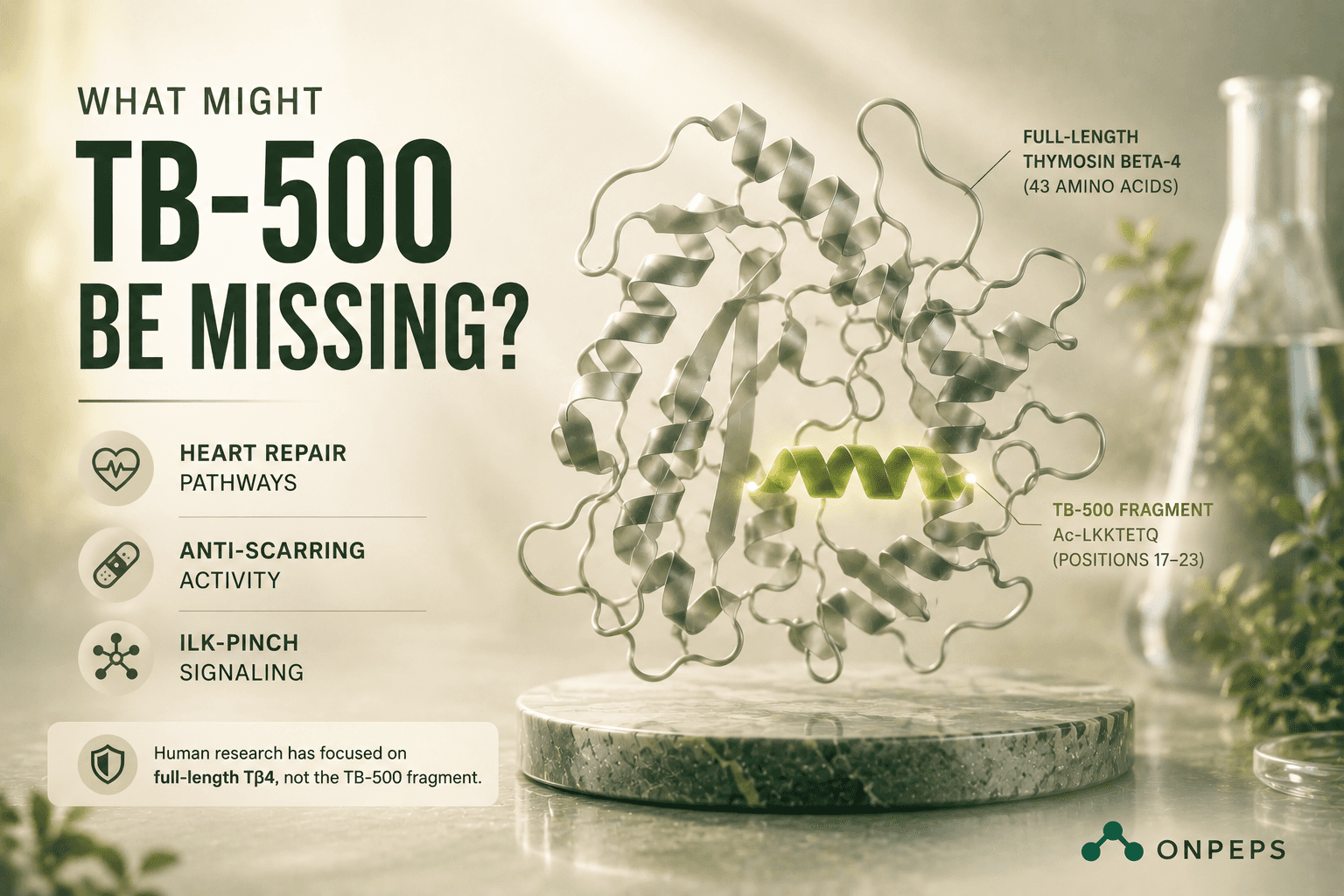
As we mentioned in our previous TB-500 article, the evidence usually cited in support of TB-500 is mainly taken from full-length Tβ4, not the synthetic fragment.
Study-by-study review
Study What was actually used Relationship to TB-500
SEER-1 Phase 3 (neurotrophic keratopathy) RGN-259 (full-length Tβ4 formulation) Not TB-500
ARISE-3 (dry eye disease) Full-length Tβ4 Did not meet primary endpoint
Zhu et al., 2016, Cytotherapy Intravenous Tβ4 Not TB-500
Phase 2 venous stasis ulcer trial (NCT00832091) Topical Tβ4 Not TB-500
Philp et al., 2003, Wound Repair and Regeneration 7-amino-acid actin-binding fragment Closest to TB-500, but not a human trial
Here is where we have to warn you
Peptide practitioners and vendors who cite human clinical evidence for TB-500 are mostly taking their data from Tβ4 studies. TB-500 has not been tested in human clinical trials.
Conclusion
Clinical evidence for TB-500 cannot be treated as direct evidence for injectable TB-500. Distinguishing between the two is essential when interpreting research.